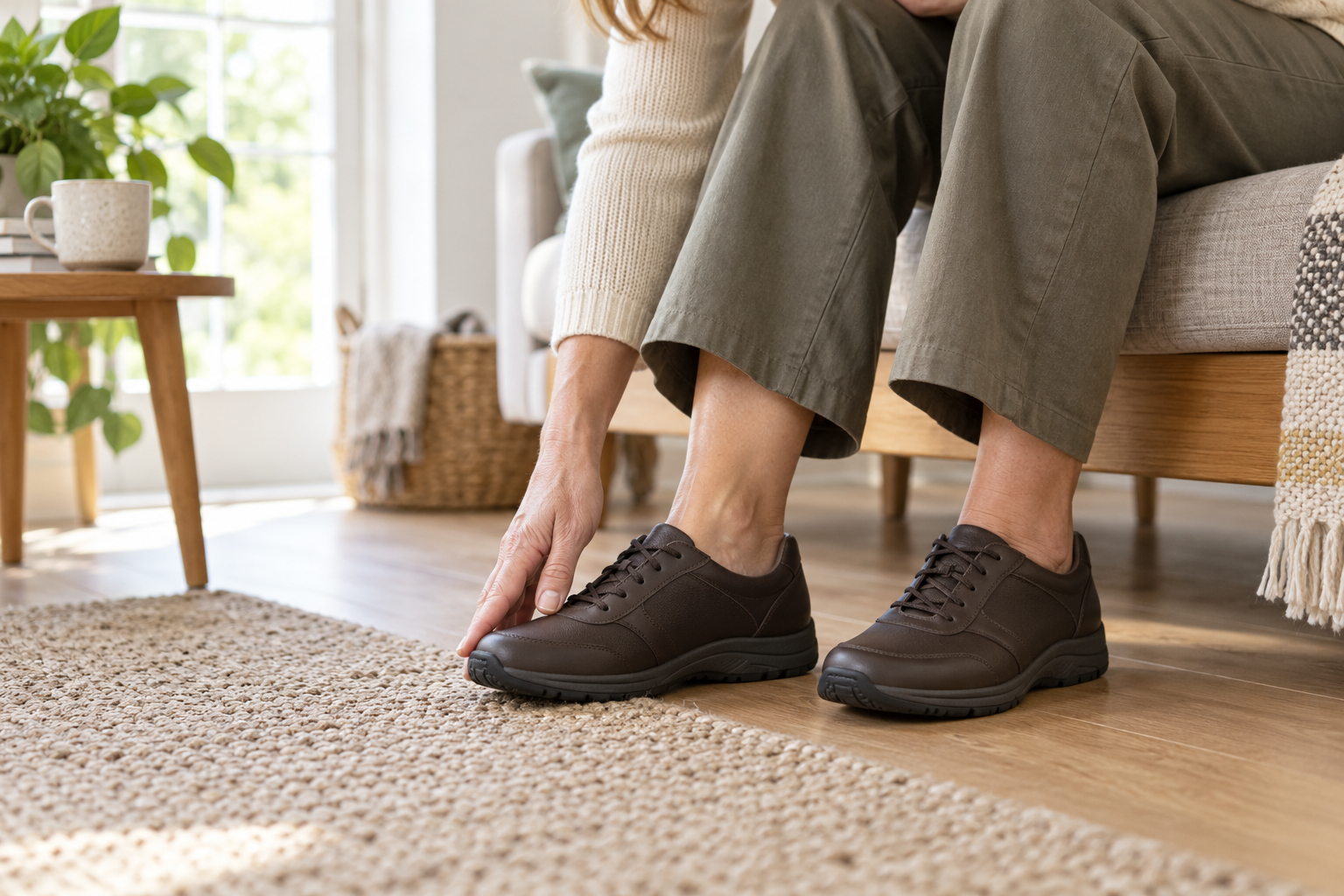
If shoes press along the sides of your feet, sizing up in length may not solve the problem. Width, toe shape, instep volume, and the position of seams all affect comfort, and brands do not use identical fit standards.
Look for explicit width options and compare the maker’s size chart with your foot measurements. Read reviews for notes about width and instep, but treat them as context rather than a guarantee. A rounder toe, adjustable lacing, or a stretch panel may change the feel of the same nominal width.
Start with the day you need it for
After a day on your feet, a shoe may feel tighter than it did in the morning. If you need footwear for commuting or standing, check how the upper behaves when you walk and whether the toe box allows your toes to spread naturally.
A useful check is to imagine the item in the middle of an ordinary day, not just at the moment you first put it on. If it needs constant adjusting, special care you cannot keep up with, or a second purchase to become usable, that belongs in the decision.
What to compare before choosing
Look for explicit width options and compare the maker’s size chart with your foot measurements. Read reviews for notes about width and instep, but treat them as context rather than a guarantee. A rounder toe, adjustable lacing, or a stretch panel may change the feel of the same nominal width.
Product descriptions can help with measurements and materials, but they cannot tell you exactly how a garment will sit on your body or how a shoe will feel after hours. Use the listed details to narrow your options, then check seller sizing guidance, return terms, and care instructions.
The trade-offs are part of the choice
Sizing up can create heel slip or excess length. Soft uppers may ease pressure but can stretch unpredictably. A wide label is not standardized across all brands.
There is rarely a universally best material, silhouette, or price point. A more useful comparison is the one that reflects your climate, how often you expect to wear the piece, and what care it asks of you.
A quick checklist before you buy
- Measure both feet while standing and use the larger measurement as a starting point.
- Try shoes with the socks or orthotics you use most often.
- Return footwear that causes persistent pain or numbness.
When details are missing, ask the seller or choose a listing that explains the relevant measurements and care. Keep a copy of the order details until you know the item works for you.
Frequently asked
Should I size up for wide feet?
Length and width are different fit dimensions. Compare width options before increasing length.
What does wide width mean in women’s shoes?
It varies by maker and style. Check the brand’s own chart and fit notes for the specific pair.
Fashion Reviews Online may earn a commission from qualifying purchases made through some links. Our recommendations are based on published product information and practical buying criteria. How we disclose.