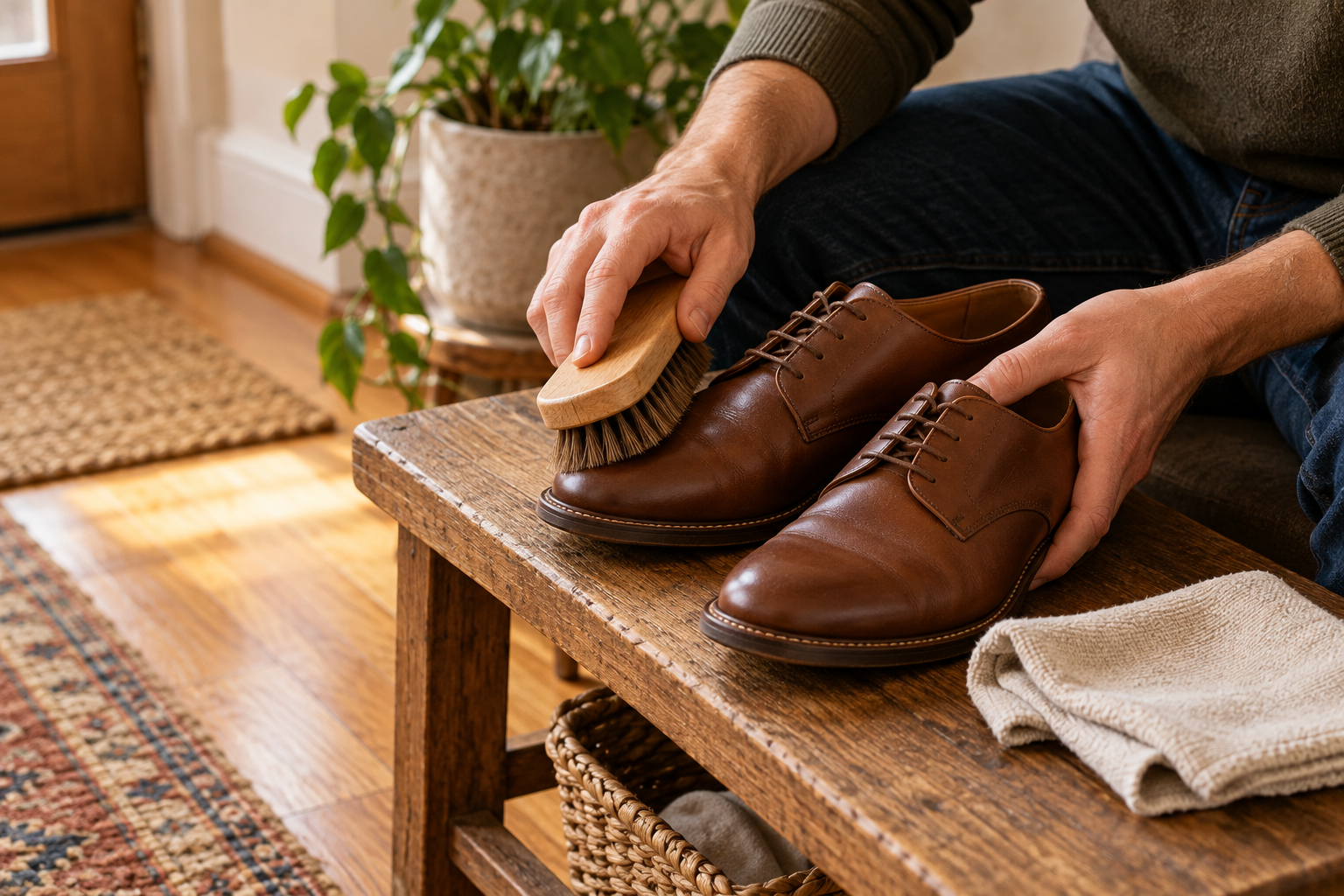
Shoe care does not need a crowded shelf of products. A few material-specific habits—letting shoes dry, removing surface dirt, and storing them thoughtfully—can make footwear easier to wear and maintain.
Check the maker’s care instructions before using cleaners or protectants. Smooth leather, suede, canvas, and synthetic materials respond differently. Test products on a hidden area, use a clean cloth or brush suited to the surface, and avoid soaking footwear unless the manufacturer says it is safe.
Start with the day you need it for
After a wet commute, putting shoes straight into a closed closet can trap moisture. A short pause to remove dirt and let them air dry may be more helpful than applying a product immediately. For suede, a dry brush is often a better first step than water.
A useful check is to imagine the item in the middle of an ordinary day, not just at the moment you first put it on. If it needs constant adjusting, special care you cannot keep up with, or a second purchase to become usable, that belongs in the decision.
What to compare before choosing
Check the maker’s care instructions before using cleaners or protectants. Smooth leather, suede, canvas, and synthetic materials respond differently. Test products on a hidden area, use a clean cloth or brush suited to the surface, and avoid soaking footwear unless the manufacturer says it is safe.
Product descriptions can help with measurements and materials, but they cannot tell you exactly how a garment will sit on your body or how a shoe will feel after hours. Use the listed details to narrow your options, then check seller sizing guidance, return terms, and care instructions.
The trade-offs are part of the choice
Conditioners can darken some leather. Water repellents may alter texture or finish. Heat can damage adhesives and dry some materials unevenly. A shoe tree can help certain leather shoes retain shape, but is not suitable for every construction.
There is rarely a universally best material, silhouette, or price point. A more useful comparison is the one that reflects your climate, how often you expect to wear the piece, and what care it asks of you.
A quick checklist before you buy
- Let damp shoes air dry away from direct heat.
- Store pairs with space around them and remove loose dirt before it sets.
- Keep care products labeled and follow ventilation and safety directions.
When details are missing, ask the seller or choose a listing that explains the relevant measurements and care. Keep a copy of the order details until you know the item works for you.
Frequently asked
Can I use the same cleaner on every shoe?
No. Choose care products for the specific material and follow the shoe maker’s guidance.
How should I dry wet shoes?
Remove excess moisture, loosen laces if appropriate, and let them air dry away from direct heat.
Fashion Reviews Online may earn a commission from qualifying purchases made through some links. Our recommendations are based on published product information and practical buying criteria. How we disclose.