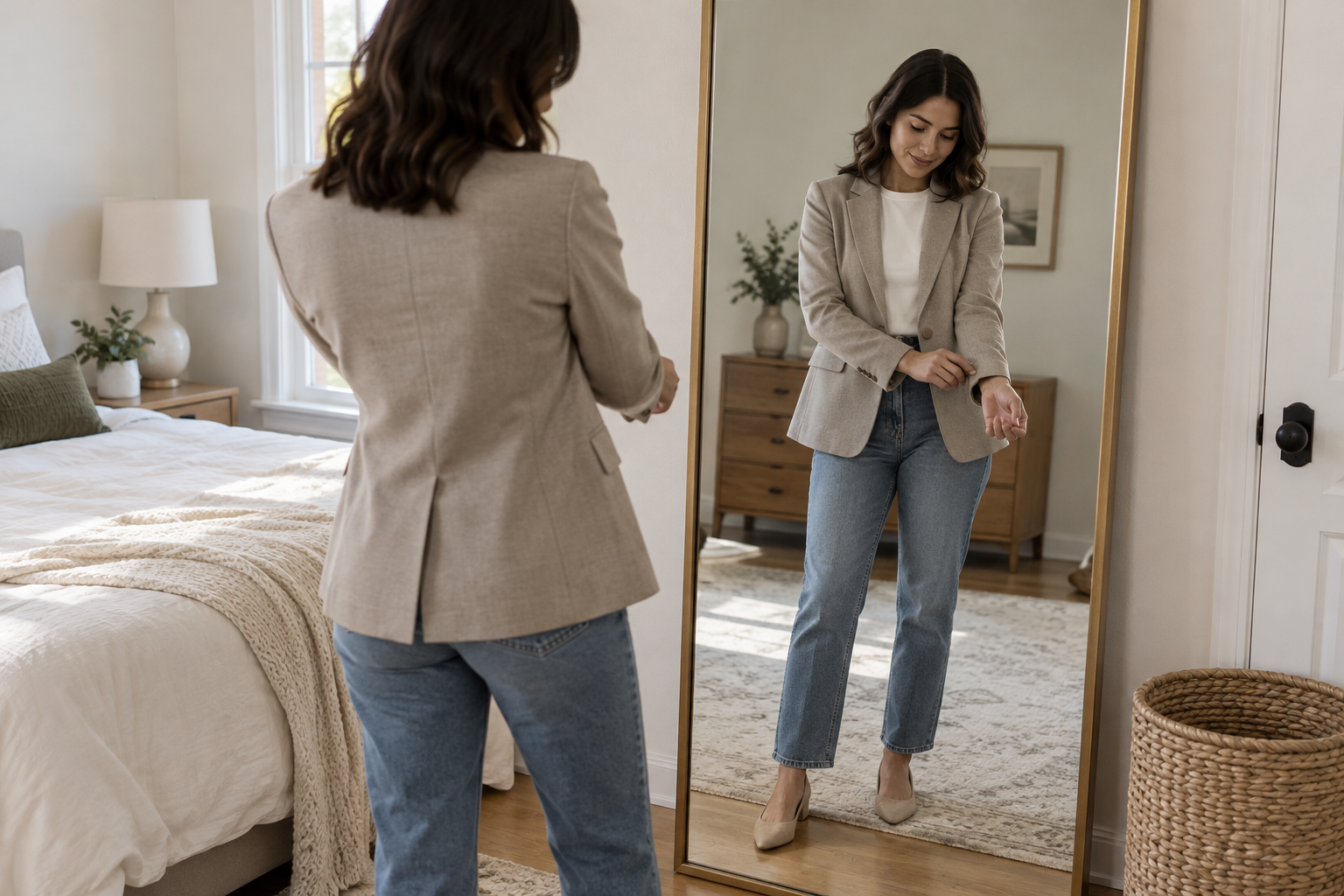
Petite sizing is about proportions as well as length. A shorter inseam helps with trousers, but shoulder placement, sleeve length, rise, and pocket position can also affect how a garment sits.
Compare garment measurements with clothing you own that fits well. For jackets, check shoulder seams and sleeve length; for dresses, compare bust, waist, and garment length; for trousers, note both rise and inseam. When an item is close, ask a tailor which alterations are realistic before buying.
Start with the day you need it for
Picture a jacket that fits across the chest but has sleeves covering your hands, or trousers that bunch at the ankle after tailoring. Those small fit issues can make an otherwise useful piece feel wrong for a workday. A petite range may adjust several proportions at once, though sizing still varies by label.
A useful check is to imagine the item in the middle of an ordinary day, not just at the moment you first put it on. If it needs constant adjusting, special care you cannot keep up with, or a second purchase to become usable, that belongs in the decision.
What to compare before choosing
Compare garment measurements with clothing you own that fits well. For jackets, check shoulder seams and sleeve length; for dresses, compare bust, waist, and garment length; for trousers, note both rise and inseam. When an item is close, ask a tailor which alterations are realistic before buying.
Product descriptions can help with measurements and materials, but they cannot tell you exactly how a garment will sit on your body or how a shoe will feel after hours. Use the listed details to narrow your options, then check seller sizing guidance, return terms, and care instructions.
The trade-offs are part of the choice
Petite sections can save alteration time but may offer fewer colors or styles. Hemming is usually straightforward, while changing shoulders, pockets, or a rise can be more involved. Shopping by a size label alone can lead to inconsistent results across brands.
There is rarely a universally best material, silhouette, or price point. A more useful comparison is the one that reflects your climate, how often you expect to wear the piece, and what care it asks of you.
A quick checklist before you buy
- Keep a short note of measurements from your best-fitting pieces.
- Read return policies before ordering several sizes.
- Ask about alteration cost before committing to a near-fit item.
When details are missing, ask the seller or choose a listing that explains the relevant measurements and care. Keep a copy of the order details until you know the item works for you.
Frequently asked
What does petite sizing change?
Brands may adjust lengths and garment proportions, but the exact changes vary. Review the brand’s size chart and garment measurements.
Is it better to buy petite or tailor regular sizing?
It depends on which areas need adjustment. Simple hems may be easy to tailor; shoulder or rise changes can be more complex.
Fashion Reviews Online may earn a commission from qualifying purchases made through some links. Our recommendations are based on published product information and practical buying criteria. How we disclose.