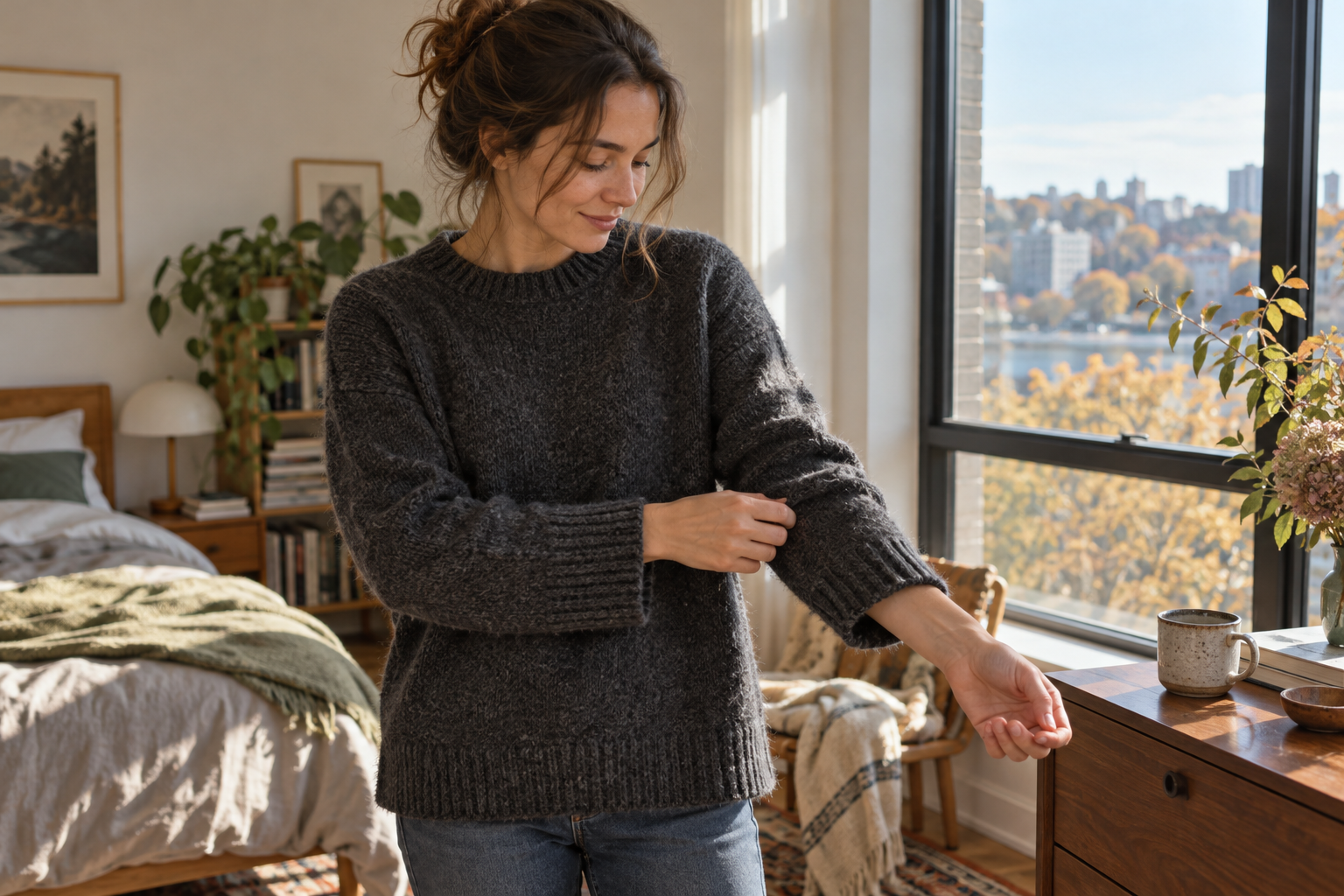
A sweater that looks warm in a product photo may feel too heavy for a heated office or too light for an outdoor commute. Think about where you will wear it most, what you will layer beneath it, and how often you are willing to care for it.
Read the fiber label and check the knit density, neckline, cuffs, and hem. Wool and cashmere can provide warmth for their weight but often need more careful handling; cotton feels different and can be heavier; synthetic blends may dry faster and cost less. Compare measurements over a shirt you actually wear.
Start with the day you need it for
On a cold morning commute, a midweight knit under a coat may be more useful than a bulky sweater that makes sleeves bunch. Indoors, a breathable layer that can be removed easily helps with changing temperatures. For travel, a knit that folds without losing its shape is practical.
A useful check is to imagine the item in the middle of an ordinary day, not just at the moment you first put it on. If it needs constant adjusting, special care you cannot keep up with, or a second purchase to become usable, that belongs in the decision.
What to compare before choosing
Read the fiber label and check the knit density, neckline, cuffs, and hem. Wool and cashmere can provide warmth for their weight but often need more careful handling; cotton feels different and can be heavier; synthetic blends may dry faster and cost less. Compare measurements over a shirt you actually wear.
Product descriptions can help with measurements and materials, but they cannot tell you exactly how a garment will sit on your body or how a shoe will feel after hours. Use the listed details to narrow your options, then check seller sizing guidance, return terms, and care instructions.
The trade-offs are part of the choice
Fine knits may snag and show wear sooner; chunky knits can be harder to layer and store. Some fibers pill with friction, especially under bag straps. Care needs affect how often a sweater becomes a convenient choice.
There is rarely a universally best material, silhouette, or price point. A more useful comparison is the one that reflects your climate, how often you expect to wear the piece, and what care it asks of you.
A quick checklist before you buy
- Follow the garment label rather than assuming all wool can be washed the same way.
- Fold heavier sweaters to reduce stretching on hangers.
- Consider pilling risk where a tote or backpack strap rests.
When details are missing, ask the seller or choose a listing that explains the relevant measurements and care. Keep a copy of the order details until you know the item works for you.
Frequently asked
How do I choose a warm but lightweight sweater?
Compare fiber, knit density, and layering needs. Fiber names alone do not guarantee the warmth or feel of a specific garment.
Do sweaters need to be dry-cleaned?
Care instructions vary by fiber and construction. Follow the label and test any home method cautiously.
Fashion Reviews Online may earn a commission from qualifying purchases made through some links. Our recommendations are based on published product information and practical buying criteria. How we disclose.