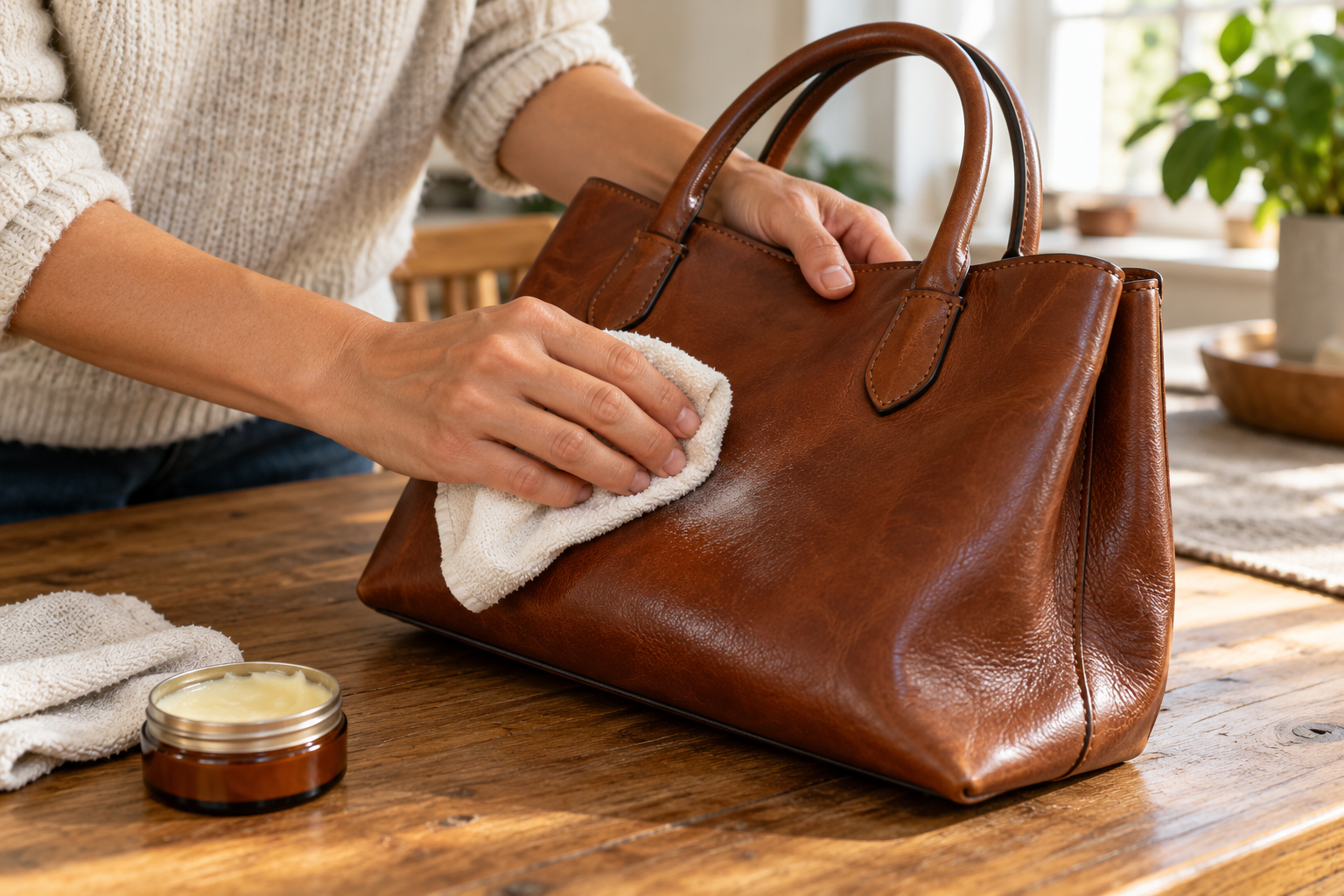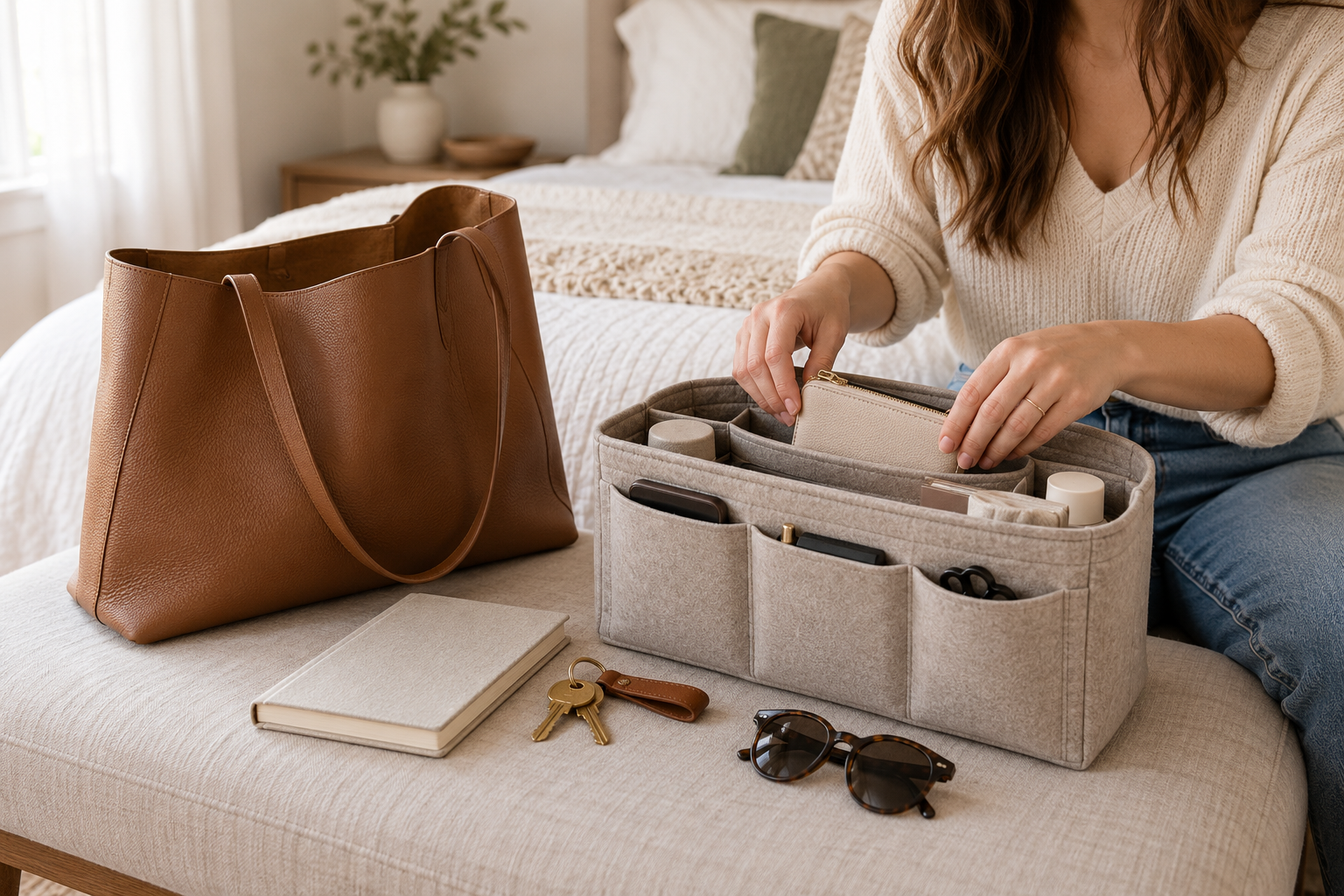
A bag organizer can make keys, a phone, and small essentials easier to find, but it can also reduce usable space. Before buying an insert, decide which items actually get lost and measure the inside of the bag you plan to use.
Measure the base width, depth, and height at the narrowest points, including any taper. Check pocket placement, closure or zipper, material, and weight. Leave space for a water bottle or notebook rather than choosing an insert by the bag’s outside dimensions.
Start with the day you need it for
On a busy commute, a key leash or open phone pocket may save time. For a soft tote, a structured insert can help the bag keep its shape. If you switch bags often, a removable organizer may make transitions quicker, provided it is not heavier than the contents it holds.
A useful check is to imagine the item in the middle of an ordinary day, not just at the moment you first put it on. If it needs constant adjusting, special care you cannot keep up with, or a second purchase to become usable, that belongs in the decision.
What to compare before choosing
Measure the base width, depth, and height at the narrowest points, including any taper. Check pocket placement, closure or zipper, material, and weight. Leave space for a water bottle or notebook rather than choosing an insert by the bag’s outside dimensions.
Product descriptions can help with measurements and materials, but they cannot tell you exactly how a garment will sit on your body or how a shoe will feel after hours. Use the listed details to narrow your options, then check seller sizing guidance, return terms, and care instructions.
The trade-offs are part of the choice
Too many compartments can make access harder. A stiff insert may rub delicate lining or keep a flexible bag from sitting comfortably. Felt can add structure but collect lint; nylon may be lighter and easier to wipe.
There is rarely a universally best material, silhouette, or price point. A more useful comparison is the one that reflects your climate, how often you expect to wear the piece, and what care it asks of you.
A quick checklist before you buy
- Measure with the bag empty and note interior seams or dividers.
- Compare organizer weight with the items it will help carry.
- Try it at home before moving valuables into it.
When details are missing, ask the seller or choose a listing that explains the relevant measurements and care. Keep a copy of the order details until you know the item works for you.
Frequently asked
Will an organizer fit any tote?
No. Interior dimensions and shape vary. Check the narrowest width and the base measurement.
Can a bag organizer damage a handbag?
A poorly fitted or abrasive insert could rub the lining. Choose a smooth material and remove it if it catches or strains the bag.
Fashion Reviews Online may earn a commission from qualifying purchases made through some links. Our recommendations are based on published product information and practical buying criteria. How we disclose.