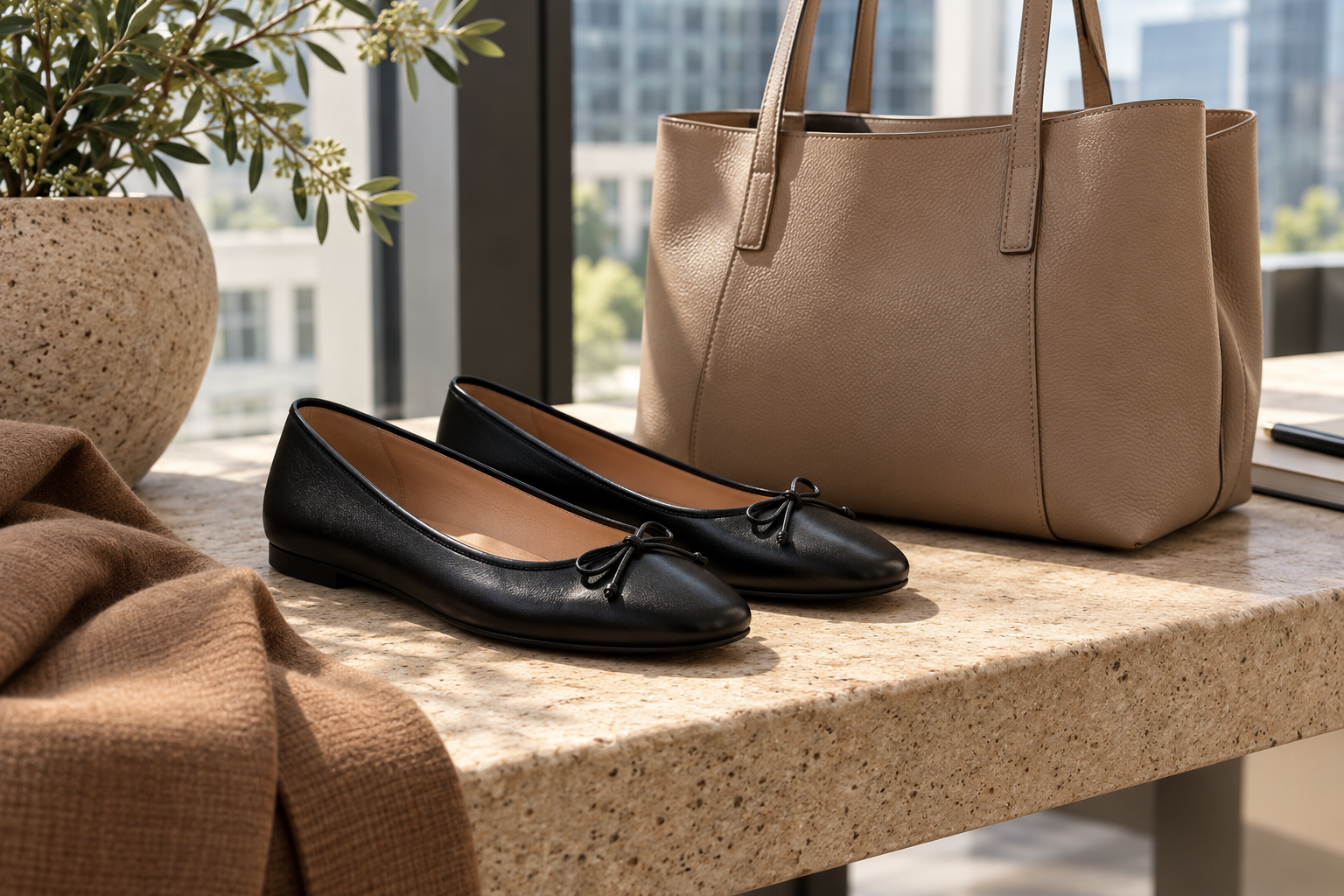
A flat shoe is not automatically comfortable. A narrow toe box, slipping heel, or stiff sole can feel worse than a low heel during a long day. Fit should be judged at the end of a normal walking day when feet may be slightly larger.
Leave enough room at the toes and check that the shoe stays on without curling your toes to grip it. Compare the product’s width options and materials. Leather may soften with wear but can require conditioning; textile uppers may be breathable but show marks more easily.
Start with the day you need it for
For a commute involving stairs and pavement, heel hold and sole grip matter. At a desk, a flexible upper can feel less restrictive when you sit for long stretches. If your job includes standing, consider whether the insole can accommodate the support you already use.
A useful check is to imagine the item in the middle of an ordinary day, not just at the moment you first put it on. If it needs constant adjusting, special care you cannot keep up with, or a second purchase to become usable, that belongs in the decision.
What to compare before choosing
Leave enough room at the toes and check that the shoe stays on without curling your toes to grip it. Compare the product’s width options and materials. Leather may soften with wear but can require conditioning; textile uppers may be breathable but show marks more easily.
Product descriptions can help with measurements and materials, but they cannot tell you exactly how a garment will sit on your body or how a shoe will feel after hours. Use the listed details to narrow your options, then check seller sizing guidance, return terms, and care instructions.
The trade-offs are part of the choice
A very thin sole can be elegant but offers little cushioning on hard floors. A cushioned footbed can help but does not correct a poor fit. Avoid assuming painful shoes will become comfortable after a break-in period.
There is rarely a universally best material, silhouette, or price point. A more useful comparison is the one that reflects your climate, how often you expect to wear the piece, and what care it asks of you.
A quick checklist before you buy
- Try shoes indoors on the surface you will use most.
- Check the return policy before wearing them outside.
- If you use orthotics, test the removable insole and interior depth.
When details are missing, ask the seller or choose a listing that explains the relevant measurements and care. Keep a copy of the order details until you know the item works for you.
Frequently asked
Should work flats feel snug at first?
They should feel secure without pressure or numbness. Do not rely on painful break-in as a fit strategy.
Are ballet flats suitable for commuting?
They can work for some routes, but evaluate sole grip, heel retention, and your walking distance.
Fashion Reviews Online may earn a commission from qualifying purchases made through some links. Our recommendations are based on published product information and practical buying criteria. How we disclose.